



Terpenes: A Guide to Hemp Aromas (2026)
This article is for information purposes only and contains no health claims. All SmokyHUB products are aromatic products made from industrial hemp, they are not medicines, and they are intended exclusively for adults.
Quick answer (for those in a hurry)
Terpenes are the aromatic molecules that give hemp — and most plants around us — their smell: limonene smells of citrus, myrcene earthy, pinene of pine forest. Every hemp strain has its own terpene “fingerprint”, which is why two strains with identical CBD content can smell completely different. The so-called “entourage effect” — the idea that cannabinoids and terpenes work as a whole — is a scientific hypothesis still being tested. For choosing a strain, one simple rule applies: your best instrument is your nose. 👇

What are terpenes?
Terpenes are a large family of volatile organic molecules that plants produce to defend against pests and attract pollinators. They are not unique to hemp: the same limonene that scents a lemon peel is found in hemp trichomes; the same pinene you breathe on a walk through a spruce forest is in rosemary and in many hemp strains. Tens of thousands of terpenes are described in nature; in hemp we regularly meet a few dozen — and it is their ratios that create a strain’s character.
Important: terpenes themselves are not psychoactive and are not a specialty of “strong” plants. They are simply the smell of nature — concentrated in the resin of the trichomes, where they are produced alongside the cannabinoids.
Six terpenes you will meet most often
Myrcene — the earthy tone
The most common terpene in hemp: it smells earthy, herbal, faintly of cloves. In nature you find it in hops, mango and bay leaf. Strains rich in myrcene are recognisable by a deep, “dark” base tone.
Limonene — citrus freshness
The signature of citrus: lemon, orange, grapefruit. The same terpene that carries the smell of citrus peel gives some hemp strains their bright, fresh, almost fruity note.
Caryophyllene — pepper and spice
Smells of black pepper, cloves and cinnamon; you also find it in basil and oregano. In hemp it provides a warm, spicy depth many describe as “exotic”.
Pinene — the pine forest
The most widespread terpene on Earth: the smell of pines, spruces and rosemary. Pinene-rich strains smell “green”, resinous and clean — like a walk through the forest after rain.
Linalool — floral softness
The main terpene of lavender; it smells floral, soft, faintly sweet. In hemp it rounds off sharper tones and adds a perfume note.
Humulene — the hoppy bitterness
Characteristic of hops (hence the name) and sage: a dry, herbal-woody smell with a slight bitterness that gives a strain seriousness and structure.
A terpene tasting table: an exercise for home
The fastest way to train your nose is to compare with things from the kitchen. Put on the table a piece of lemon peel (limonene), a sprig of rosemary (pinene), a few black peppercorns (caryophyllene), a dry bay leaf (myrcene) and a bag of lavender tea (linalool). Smell each one separately, then smell your flower or piece of resin and try to spot which of these notes you can find in it. Two minutes of practice — and terpenes are suddenly no longer theory but smells you have known all your life.
Terpenes in flowers and in hash
Terpenes are produced in the same trichomes as the cannabinoids — which is why resin is their most concentrated form. In flowers, terpenes are “dispersed” through the plant material and smell fresh and recognisably varietal; in hash they are condensed, so the smell is deeper, darker and longer-lasting. How resin is made, we explained in How is hash made, and the comparison of the two forms in CBD hash or hemp flowers.
Why do two strains with the same CBD have completely different characters?
Because the cannabinoid percentage tells only half the story. Two strains with identical CBD content can differ in dozens of terpenes and their ratios — one will be bright and citrusy, the other dark and spicy. That is why serious sellers increasingly list a batch’s leading terpenes alongside the cannabinoids: it is the only figure that predicts how a strain will smell. If you must choose between two strains on paper, pick the one whose leading terpenes you already like from the kitchen and from nature.
What is the “entourage effect”?
In the literature you often meet the term “entourage effect”: the hypothesis that cannabinoids and terpenes together form a whole that is more than the sum of its parts. To be honest about it: this is a scientific hypothesis that research is still testing, and the evidence so far is mixed and incomplete. So we stick to what is reliable and verifiable: terpenes are the carriers of aroma, and their ratios are the reason every strain has its own character. No promises about effects — just a scent you can verify with your own nose.
How to “read” terpenes with your nose
- Smell a fresh piece: terpenes are volatile, so the first impression when opening the jar is the most telling.
- Look for layers: the base tone (earth? citrus?), then the middle (spice? flowers?) and the finish (resin? wood?). Like coffee or wine — with practice it becomes natural.
- Compare two strains side by side: differences are ten times more obvious in direct comparison.
- Write down your impression: after three or four strains you will know which terpene profiles are “yours”.
Smell is also the first measure of quality: a flower or resin that smells of hay or damp was cured or stored wrong. All the criteria are collected in our guide on how to spot quality hemp buds.
Terpenes through seasons and moments of the day
Smell is deeply tied to context: most people experience citrus and pine notes as “morning” and summery, earthy and spicy ones as “evening” and autumnal — the same logic known to perfumery, tea culture and cooking. So it is no accident that many people arrange their shelf by moments of the day: a bright, fresh profile for the morning coffee, a warm, rounded one for the afternoon break, a deep, resinous one for the evening with a book. There are no rules — but this game of combining is exactly why an aromatic collection never gets boring.
Three characters, three aroma signatures
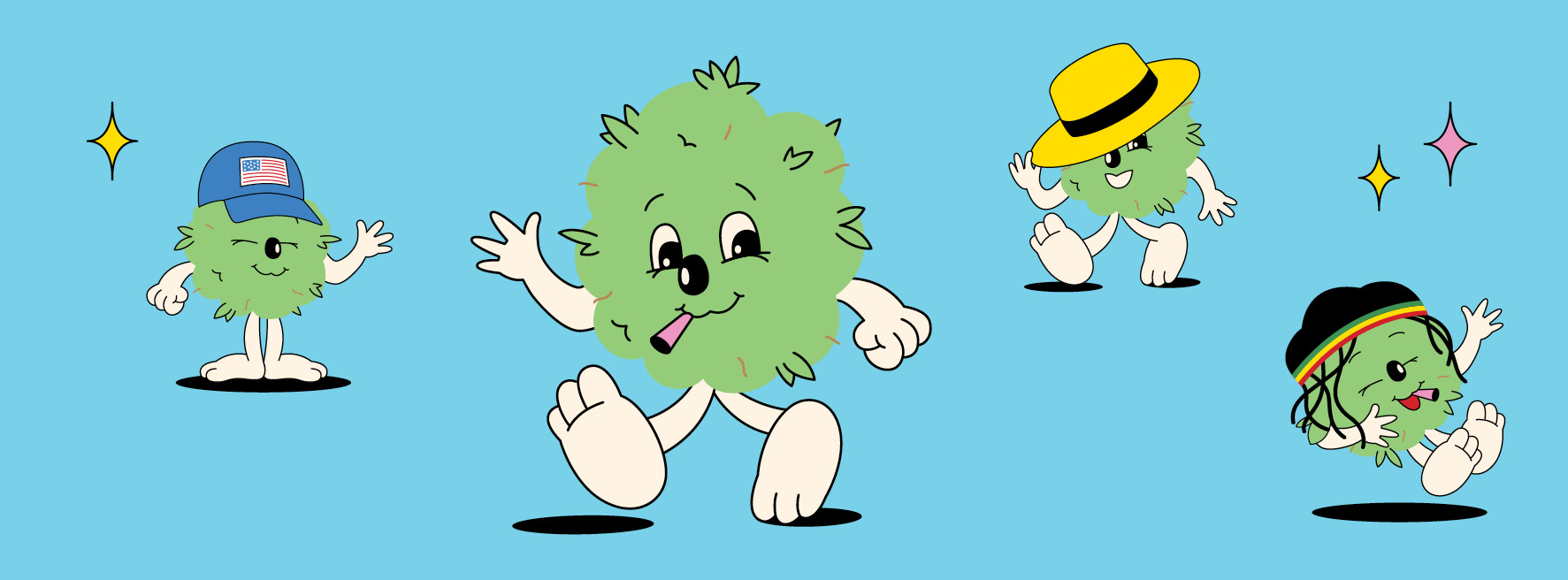
Our three Smokys are really three terpene worlds: Carry Lift bets on bright, fresh tones for the morning, Bob Mellow on warm, rounded notes for the afternoon, and Sleepy Joe on deep, earthy ones for the evening. Each character exists as flowers and as hash — the same aroma philosophy, two textures: CARRY LIFT hash, BOB MELLOW hash and SLEEPY JOE hash. Not sure which one is yours? Take the quiz →
Frequently asked questions (FAQ)
Are terpenes safe?
Terpenes are naturally present in food, spices, fruit and the essential oils you meet every day. Our products are aromatic products — you smell the terpenes in them the way you smell lavender or a lemon.
Can terpenes get you high?
No. Terpenes are not psychoactive — they are molecules of smell. Psychoactivity in cannabis comes from THC, of which industrial hemp contains less than 0.3%.
Why does the same strain sometimes smell different?
The terpene profile varies from batch to batch (harvest, drying, curing), and terpenes also evaporate over time. A fresh, properly stored batch will always smell more expressive than an old one.
What destroys terpenes?
Heat, air and light — exactly what the cool-dark-airtight rule protects against. Storage is not pedantry; it is aroma preservation.
Does hash have the same terpenes as the flower it was made from?
Essentially yes — but in different ratios: sifting and pressing lose some of the most volatile terpenes and concentrate the heavier ones. That is why resin smells deeper and “darker” than its flower.
Be happy, be smoky. 💛
SMOKY QUIZ
WHICH SMOKY ARE YOU?
Carry Lift, Bob Mellow or Sleepy Joe? Take the 2-minute quiz and find your character — a little gift is waiting too. 😉
Take the quiz →Contents